
- Blue Origin’s Blue Moon lander passed thermal vacuum testing inside NASA’s legendary Chamber A facility in Houston.
- The Blue Moon lander, named Endurance, survived simulated space conditions including airless vacuum and extreme temperature swings.
- The test marks a critical milestone for NASA’s Artemis program, which aims to return humans to the Moon’s surface.
- Blue Origin is competing to prove its hardware is flight-ready before a crewed lunar landing attempt later this decade.
- Blue Origin’s Blue Moon lander passed thermal vacuum testing inside NASA’s legendary Chamber A facility in Houston.
- The Blue Moon lander, named Endurance, survived simulated space conditions including airless vacuum and extreme temperature swings.
- The test marks a critical milestone for NASA’s Artemis program, which aims to return humans to the Moon’s surface.
- Blue Origin is competing to prove its hardware is flight-ready before a crewed lunar landing attempt later this decade.
The Room That Decides If You’re Ready for Space
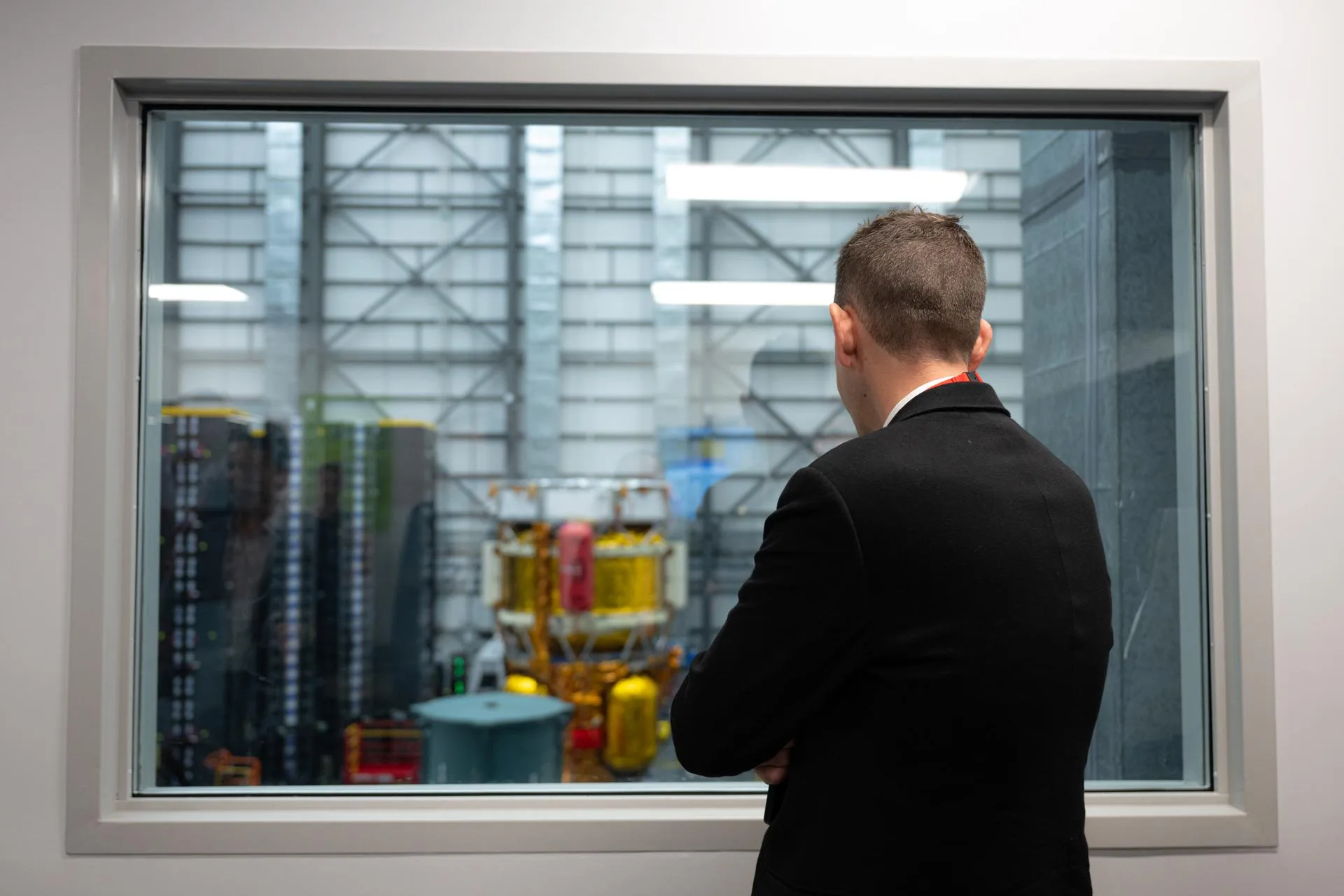
The Blue Moon lander just cleared one of the most demanding tests any spacecraft can face on Earth — and it did so inside a facility that has quietly shaped the history of human spaceflight. Chamber A at NASA’s Johnson Space Center in Houston is a massive steel vacuum vessel, one of the largest thermal vacuum test chambers on the planet. It can strip a spacecraft of every last molecule of surrounding air and then bake or freeze it across temperature ranges that would destroy ordinary hardware. If your vehicle can survive Chamber A, there’s a reasonable argument it can survive space.
Blue Origin’s Blue Moon Mark 1 vehicle — officially named Endurance — has now done exactly that. The company confirmed the lander passed its thermal vacuum testing campaign, a milestone that moves the program meaningfully closer to putting astronauts on the lunar surface under NASA’s Artemis program.
What Chamber A Actually Does to a Spacecraft
It’s easy to underestimate what thermal vacuum testing involves. Space isn’t just cold — it’s a savage oscillation between extremes. Surfaces in direct sunlight near the Moon can reach over 120°C (248°F), while shadowed regions plunge to around -130°C (-202°F). And there’s no air to moderate any of it, no convection to carry heat away gently. Hardware that works perfectly at sea level can crack, delaminate, outgas, or fail entirely under those conditions.
Chamber A has been the proving ground for spacecraft going back decades. The James Webb Space Telescope spent 100 days inside it before launch. Apollo-era hardware was tested there. The fact that the Blue Moon lander is the latest vehicle to pass through that chamber puts it in serious company. This isn’t a box-ticking exercise — it’s where you find out whether your engineering actually holds up.
For a lunar lander specifically, the thermal and vacuum environment is especially punishing. The vehicle has to survive the journey from Earth orbit to lunar orbit, the descent to the surface, the time it spends sitting on the Moon, and then the ascent back to orbit. Each phase presents different thermal loads, and the hardware has to handle all of them without a single critical failure. There’s no repair crew on the Moon.
Blue Moon Lander and the Artemis Stakes
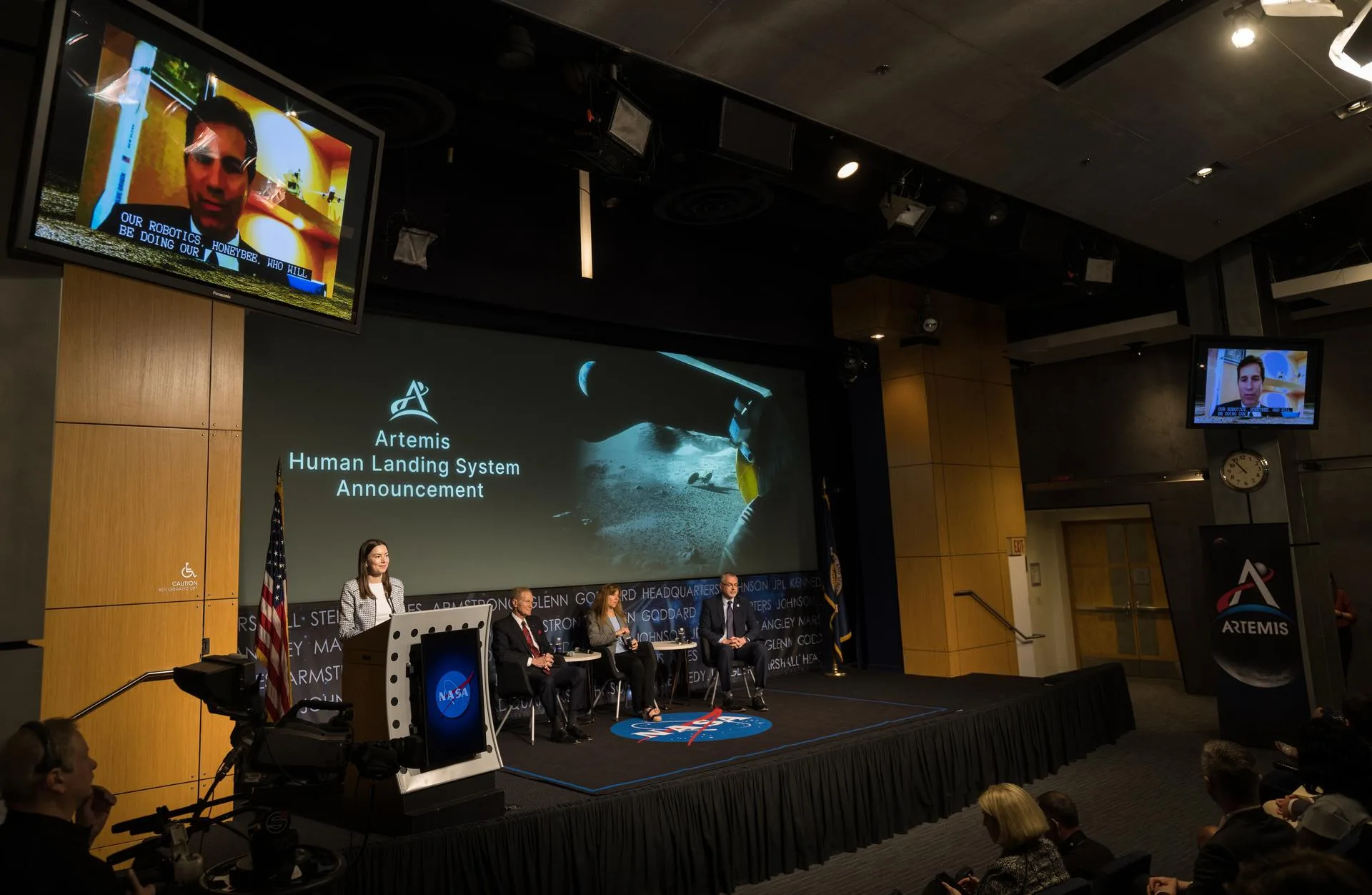
Blue Origin was awarded a NASA Human Landing System contract for Artemis in 2023, following years of legal battles with SpaceX after losing the original contract award in 2021. Jeff Bezos’s company sued NASA, Congress eventually appropriated funds for a second lander provider, and Blue Origin got its second shot. Since then, the pressure to demonstrate hardware credibility has been immense.
The Blue Moon lander is Blue Origin’s answer to that pressure. It’s a large, fully reusable lander designed to carry astronauts from the Gateway lunar space station — which NASA is building in lunar orbit — down to the surface and back. The design draws on Blue Origin’s BE-7 engine, an LOX/liquid hydrogen engine that the company has been testing since 2019. Hydrogen propulsion is more efficient than the kerosene-based systems used in many other rockets, which is a real advantage when you’re trying to squeeze every bit of performance out of a Moon landing mission.
Passing thermal vacuum testing doesn’t mean the Blue Moon lander is ready to fly tomorrow. There’s still a long road of additional qualification testing, integrated systems checks, and ultimately an uncrewed demonstration mission before NASA will put astronauts aboard. But it does mean the vehicle’s core structure and systems have proven they can withstand the space environment — which is a genuinely significant hurdle cleared.
How This Fits the Broader Lunar Landscape
Blue Origin isn’t operating in a vacuum — no pun intended. SpaceX’s Starship is NASA’s other Human Landing System provider, and Elon Musk’s company has been making headline-grabbing progress with its own massive vehicle, including successful integrated flight tests and the first orbital catch attempt. The competitive dynamic here is real. NASA needs both providers to succeed to give the program resilience, but there’s an implicit race to demonstrate readiness.
Meanwhile, the commercial lunar economy is quietly taking shape around these headline missions. Companies like Intuitive Machines and Astrobotic are already delivering payloads to the Moon under NASA’s Commercial Lunar Payload Services program — Intuitive Machines’ IM-1 mission successfully landed near the lunar south pole in early 2024, the first American soft landing on the Moon since Apollo 17 in 1972. The infrastructure being built around Artemis — landers, Gateway, surface systems — represents a fundamentally different model from the Apollo era. It’s designed to be sustainable, reusable, and eventually commercially viable beyond NASA contracts.
The Blue Moon lander’s successful Chamber A campaign fits neatly into that picture. It’s not just about one test — it’s about demonstrating that Blue Origin can build hardware that meets NASA’s unforgiving standards and keep pace with an increasingly credible field of competitors. The company has faced years of criticism for moving slowly relative to SpaceX, and every milestone like this is an opportunity to reframe that narrative.
What Comes Next for Endurance
With thermal vacuum testing behind it, the Blue Moon lander program will move through additional qualification milestones. NASA’s timeline targets the first crewed Artemis Moon landing — Artemis III — in the late 2020s, though that schedule has shifted before and could shift again. The agency is balancing hardware readiness, Gateway development, and the Orion spacecraft program simultaneously, and any one of those threads can affect the overall timeline.
What’s clear is that Blue Origin now has tangible hardware evidence that its lunar lander can survive the environment it’s designed for. That matters for NASA confidence, for the program’s political standing in Congress, and frankly for Blue Origin’s own credibility as a serious deep-space player. Chamber A has seen a lot of spacecraft come through its doors over the decades. The ones that passed went on to do remarkable things. Whether Endurance joins that list depends on everything that comes next — but it’s earned its place in the sequence.